Introduction
Let’s be real—running a business means juggling a lot of moving parts. But if your customer relationship management (CRM) system and accounting software are operating like two different planets, it creates a ton of friction. You miss out on data clarity, speed, and the power of automation. That’s why integrating CRM and accounting tools isn’t just a tech upgrade—it’s a strategy for smarter growth. Let’s dive into how this integration works, why it matters, and how you can make it part of your business operations.
Streamlining Data Entry
Double data entry is more than just annoying—it’s a time drain that invites costly errors. Imagine a salesperson updating a client’s info in the CRM after closing a deal. Then the finance team has to retype that same information to create an invoice. That’s two opportunities for typos, delays, and frustration. When you integrate your CRM and accounting systems, customer data flows between platforms automatically.
This seamless sync means when someone updates an address or contact detail, it reflects everywhere. I’ve seen companies cut their admin time by hours each week just from this one fix. It’s like giving your team back extra hours in their day without hiring anyone new.
Real-Time Financial Visibility
Your CRM is tracking potential revenue. Your accounting software is tracking actual revenue. Without integration, you’re looking at two different stories. One shows promise. The other shows results. But what if both tools shared the same narrative?
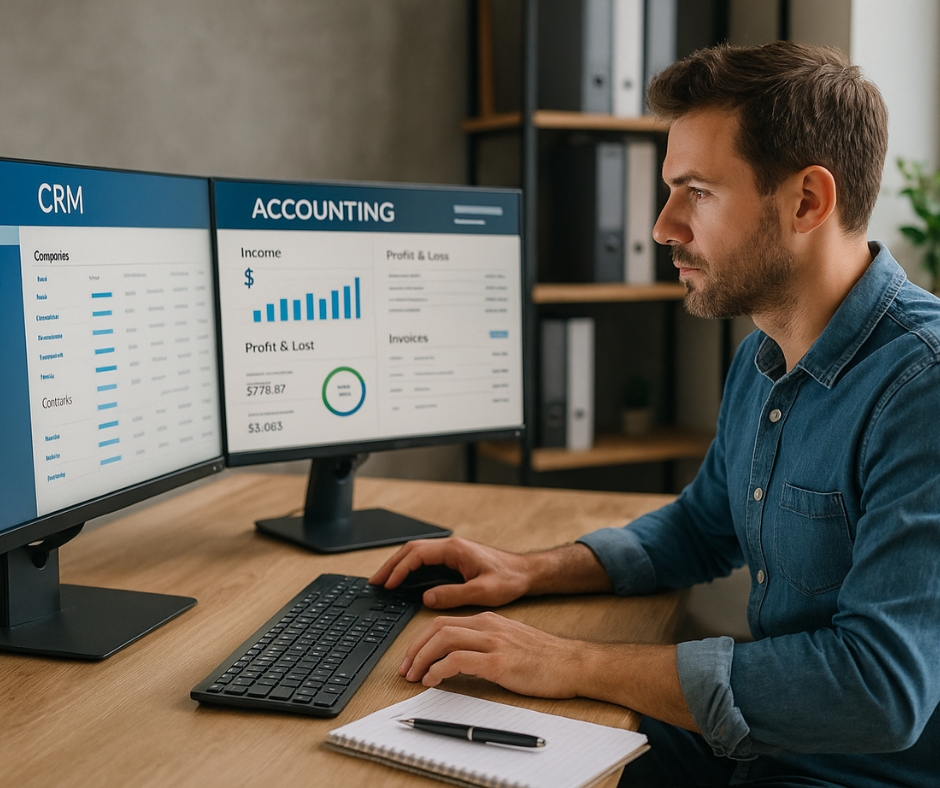
Integrating CRM and accounting software connects the dots. When your team closes a deal, you instantly see the impact on your financials. Your leadership can view how pipeline opportunities align with cash flow. It creates a 360-degree view—one where you’re not guessing whether your projections are realistic, because you’re seeing them evolve in real time.
Let me tell you, there’s nothing like logging into a dashboard and seeing your forecast turn into reality—without exporting spreadsheets or playing data detective.
Improved Customer Insights
Here’s a truth I learned the hard way: customer behavior isn’t just about what they say—it’s about what they do. CRMs are great at tracking sales conversations, follow-ups, and deal progress. But your accounting tool tells the story of what a customer has actually paid for, how promptly they pay, and whether they’re growing in value.
When those two systems talk, your customer profiles come alive. You can spot your most profitable clients, target them with loyalty perks, or re-engage the ones who haven’t made a payment in months. For example, if your CRM flags a deal renewal but your accounting shows unpaid invoices, you might reconsider offering terms or extend support first.
That’s what real relationship management looks like: not just friendly communication, but informed and strategic interactions.
Enhanced Invoicing Accuracy
Manual invoicing can turn into a nightmare. Missing line items. Wrong billable hours. Sending invoices to the wrong email address. It’s easy to mess up when you’re pulling details from one system and pasting into another. And those mistakes? They slow down payments, damage trust, and create unnecessary back-and-forth.
When your CRM is connected to your accounting tool, invoices can auto-generate from closed deals, including details like product SKUs, service hours, discounts, or delivery fees. That’s not just convenient—it’s powerful. You get paid faster, reduce billing disputes, and your team doesn’t waste time correcting avoidable errors.
In one business I consulted, automating invoicing shaved 3 days off their monthly billing cycle. That’s three more days with cash on hand.
Better Forecasting
Forecasting isn’t just about knowing where you’re going—it’s about preparing for it. Yet many small businesses still forecast in silos. The sales team projects revenue, but the finance team sees gaps that weren’t considered. That disconnect leads to poor planning.
Integrating CRM and accounting tools brings these insights together. You can create revenue forecasts that account for actual cash flow history, average invoice lag, seasonal patterns, and even client churn. Now your numbers are grounded in reality, not guesswork.
Let’s say your CRM says you’ll close $100,000 in deals next quarter. Your accounting tool shows that clients usually pay 45 days after invoicing. With integrated forecasting, you can build cash flow projections that reflect when money will actually hit your bank.
Simplified Compliance
Financial compliance often feels like a maze—especially during audits or tax season. You scramble to locate invoices, reconcile transactions, and prove your records are clean. But with integrated systems, compliance becomes far less stressful.
You get a clear audit trail showing who did what and when. Payment records match sales records. Tax codes apply automatically based on the location or type of product. And end-of-year reporting takes hours, not weeks.
Honestly, I’ve watched businesses save thousands in accountant fees just by having organized, integrated records. It’s not glamorous, but it’s gold when you need it.
Choosing Integration-Friendly Tools
Not every tool plays nice with others. If you’re in the market for CRM or accounting software, prioritize platforms that offer native integrations, open APIs, or strong third-party support.
Some solid options include:
- QuickBooks: Integrates with many CRMs like HubSpot, Salesforce, and Zoho
- Xero: Known for its flexible integration options and ease of use
- Salesforce: Offers deep integration with financial tools, though more advanced
- Zoho Books + Zoho CRM: A unified ecosystem, great for smaller teams
- HubSpot + Stripe/QuickBooks: A low-code solution for modern startups
When selecting tools, also think about scalability. What works for five team members should still support you when you grow to fifty.
Final Thoughts
Here’s the bottom line: if your CRM and accounting systems aren’t integrated, you’re leaving time, insight, and money on the table. The benefits go beyond convenience. This integration builds a smarter business—one that runs with clarity, agility, and confidence.
Integrating CRM and accounting tools isn’t a future goal. It’s a present-day advantage. And it’s one of the easiest ways to upgrade how your business thinks, moves, and grows.