
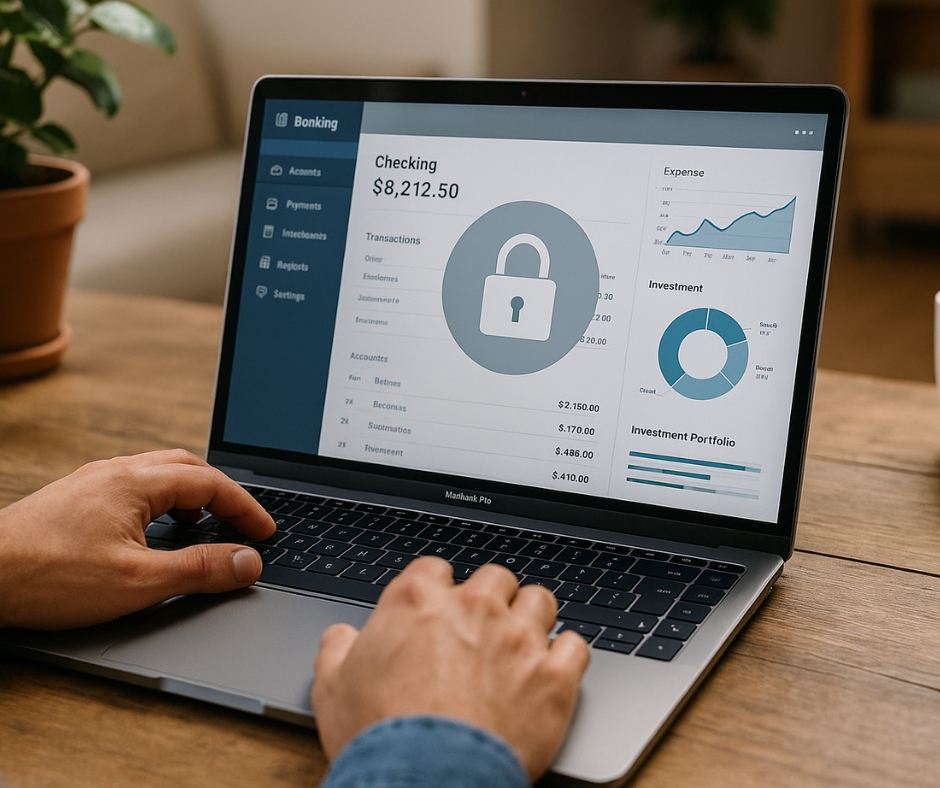
When it comes to managing your business finances, using online tools can feel like a dream—until you realize how much sensitive information you’re putting at risk. Whether you’re checking account balances, reviewing reports, or integrating platforms, you’re constantly exchanging valuable data. That’s why data security in financial tools isn’t just a convenience—it’s a responsibility.
In this post, I’m going to break down everything you need to know so you can protect your financial data without getting lost in tech jargon. I’ll walk you through the most important features, best practices, and real-world considerations that can help you stay one step ahead of potential threats.
🔐 Encryption Standards: The Non-Negotiable Foundation
Let’s start with the bedrock of data security: encryption. In the simplest terms, encryption scrambles your data so that only someone with the right key can read it. This process is critical, both when data is being stored and when it’s being sent between devices or servers.
The gold standard today is AES-256-bit encryption. You’ll find it used by major banks, credit card processors, and top-tier fintech companies. If a financial tool doesn’t list its encryption specs, that’s a red flag. Transparency here is not just good—it’s essential.
But encryption doesn’t work in isolation. It should be part of a layered security system that also includes secure connections (like HTTPS), data tokenization, and continual vulnerability testing. Always look for tools that mention “end-to-end encryption” and “encryption at rest and in transit” in their documentation or security statements.
🔒 Multi-Factor Authentication: A Second Door to Knock On
One of the simplest yet most powerful ways to protect your financial accounts is Multi-Factor Authentication (MFA). Relying on just a username and password is like using a padlock from the dollar store to protect a vault.
MFA requires an extra step—typically a code sent to your phone, a prompt on an authentication app, or biometric verification. This adds a massive layer of defense, especially when employees or team members are logging in from different locations or devices.
I personally use an MFA app that rotates codes every 30 seconds. It’s a minor inconvenience that delivers major peace of mind. If your financial tool doesn’t support MFA, it’s time to find one that does.
🧯 Data Breach Response Plans: Don’t Wait Until It’s Too Late
Even the most secure systems can be breached. What really matters is how your financial tool responds when that happens.
An effective breach response plan should include:
- Immediate detection and notification
- Account lockdown procedures
- Detailed follow-up with affected users
- Access to forensic reports and next steps
- Transparent, accountable communication
Ask your provider: “What’s your protocol if a breach occurs?” If they can’t give you a clear, documented answer—or if they avoid the question—that’s a major red flag.
And don’t just rely on the software provider. As a business owner, you should have your own internal response plan: who to contact, what to shut down, and how to inform your clients or team.
🔄 Secure APIs: The Hidden Weak Links
APIs (Application Programming Interfaces) allow your tools to “talk” to each other. For example, your accounting app might pull data from your bank or CRM. That convenience is amazing—until it opens the door to hackers.
Every API your tool connects to needs to be secured and authenticated. This means it should use encrypted connections, token-based access, and strict limitations on what it can access and when.
I once worked with a client whose analytics tool was leaking data through a poorly designed API. We only discovered it after a suspicious login. That’s how stealthy these vulnerabilities can be. Always ask your software vendors what security measures they use for their integrations.
👥 User Access Controls: Not Everyone Needs the Master Key
When multiple people use the same financial software, things can get messy fast. Without user access controls, you’re essentially handing everyone a master key to your business’s financial kingdom.
Strong financial tools let you:
- Assign specific roles (like viewer, editor, admin)
- Limit access by feature or department
- Track activity logs to see who did what
- Require admin approval for major changes
I’ve found that businesses with clear access controls experience fewer internal mishaps, data entry errors, and unauthorized transfers. You wouldn’t give your intern access to your bank account—your software should reflect that logic.
☁️ Cloud Storage Risks: Understand Where Your Data Lives
Most modern financial tools store data in the cloud. While this offers flexibility and efficiency, it also means your data is sitting on someone else’s server—possibly in a different country.
You should know:
- Where the data is physically stored
- How often it’s backed up
- Whether there’s a disaster recovery plan in place
- How redundant the system is (can it failover if one server crashes?)
Also, ask whether the provider is using private servers, public cloud services, or a hybrid solution. Each has different implications for control, cost, and risk. Don’t shy away from asking technical questions—it’s your right as a customer.
📜 Compliance and Regulations: Follow the Law or Pay the Price
Regulatory compliance is the part most businesses overlook—until it’s too late. Your financial tools should comply with standards like:
- PCI-DSS (if you handle card payments)
- SOC 2 (for cloud service providers)
- GDPR/CCPA (if you deal with customer data in Europe or California)
- FINRA or SEC rules (if you work in finance or investing)
Compliance isn’t just about ticking boxes. It means your provider is audited regularly, follows strict processes, and is legally accountable for how they handle your data. If you’re ever audited or experience a breach, having compliant tools will reduce your liability.
Final Thoughts: Security Is a Daily Practice
Ultimately, data security in financial tools isn’t a one-time setup—it’s a continuous effort. You have to review, question, and improve your systems on a regular basis.
Think of it like flossing. It’s easy to ignore until something goes wrong—and by then, it’s painful and expensive to fix. Prioritize your data hygiene the same way you prioritize cash flow. Because once trust is broken, it’s incredibly hard to earn back.