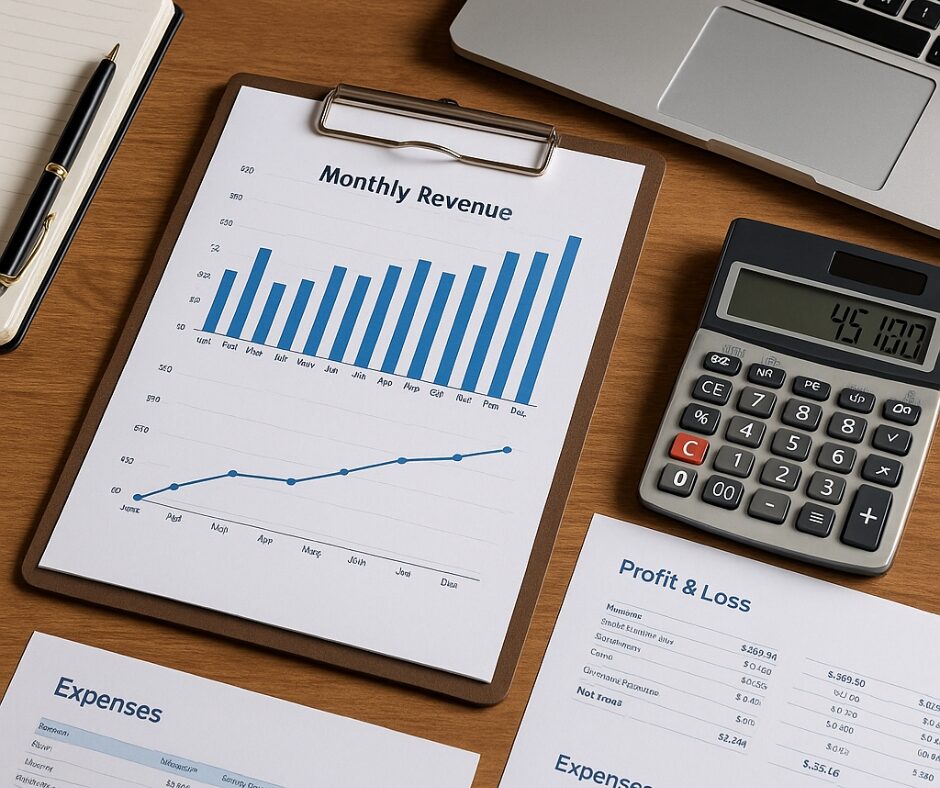

Understanding the numbers isn’t about being a math wizard. It’s about being a capable leader. Whether you’re just starting out or you’re scaling fast, your business’s financial health is what determines its future. Entrepreneurs often talk about passion, grit, or vision. But without financial clarity, those things can only carry you so far.
I learned this the hard way. In my early days, I focused almost entirely on operations and growth. I assumed that if revenue was coming in, we were doing fine. I didn’t dive deep into what those numbers actually meant — and it almost cost me everything.
Today, I make financial data part of every major decision. And if I had to give one piece of advice to every business owner I meet, it’s this: understand the numbers.
Let’s explore why this skill is essential — and how it can reshape your business trajectory.
1. The Numbers Show You the Truth — Not Just the Highlights
As entrepreneurs, we love a good win. We celebrate a surge in sales, a viral campaign, or a great client testimonial. But the reality is, numbers give you a complete, honest picture — even when it’s not what you want to see.
Let’s say you had $25,000 in revenue last month. Great! But what were your expenses? What did it actually cost to earn that revenue? What percentage of your income is pure profit? Once you peel back the surface, you may find that the celebration came too early.
When you understand the numbers, you stop relying on emotion or surface-level signals. You start using real, measurable data to guide your choices. And that’s a powerful shift.
2. Better Decisions Start With Better Data
Every day in business, we face a barrage of choices. Should you raise your prices? Hire a contractor? Cut spending on ads? Expand your product line?
Entrepreneurs who understand their financials make data-backed decisions — not guesses. For example, knowing your customer acquisition cost (CAC) helps you determine whether your marketing is profitable. Understanding your lifetime customer value (LTV) tells you how much you can spend to acquire a customer and still make a profit.
If you’re guessing at those numbers, you’re operating on hope. But when you know your financial metrics, you can align your strategy with real performance. That’s how you go from hustle to growth.
3. Cash Flow Management Prevents Crisis Mode
Here’s a hard truth I’ve had to face: even profitable businesses can go under if they don’t manage cash flow. In fact, cash flow issues are one of the top reasons small businesses fail.
Profit looks great on a spreadsheet, but it doesn’t pay the bills. If your accounts receivable lag behind your payables, you’re constantly robbing Peter to pay Paul. It’s stressful. I’ve been there.
When you understand your numbers — especially the timing of money in versus money out — you can anticipate shortfalls and plan for them. That means fewer financial emergencies and a stronger sense of control.
I now check cash flow reports weekly. It’s like checking the gas tank before a road trip — it keeps you from getting stranded halfway there.
4. Financial Awareness Helps You Spot Problems Early
Think of your financial data like the dashboard on your car. If something’s wrong, the warning light comes on. But if you’re not paying attention — or you don’t know what the light means — small problems turn into major repairs.
Maybe your gross margin is slowly declining. Maybe expenses in one category are creeping up month over month. Without regular financial check-ins, those shifts go unnoticed until there’s a crisis.
Understanding your numbers helps you catch these changes early. And early intervention is everything. It’s easier (and cheaper) to fix a small leak than replace the engine.
5. Investors and Lenders Speak Numbers — So Should You
If you’re looking for funding, mentorship, or partnerships, financial literacy becomes your secret weapon. The people you’re pitching to? They don’t just want to hear your dream — they want to see how your dream is structured financially.
A great product with terrible financials is a liability. A mediocre product with smart financial controls is an asset.
When you can clearly articulate your revenue streams, cost structures, margins, cash flow, and growth trajectory, you build trust. You come across as credible, competent, and prepared.
The ability to understand the numbers makes you not just a visionary, but a leader who knows how to deliver.
6. Confidence Comes From Clarity
Let’s be honest: many entrepreneurs avoid the numbers because they feel intimidated by them. I get it. I used to feel that way too. But here’s the irony — the more you avoid them, the more powerless you feel.
Once I committed to learning my numbers, everything changed. I no longer second-guessed pricing. I no longer feared tax season. I walked into meetings with confidence because I wasn’t guessing. I had data.
Confidence doesn’t come from perfection. It comes from clarity. And clarity comes from knowing exactly where you stand.
7. Numbers Drive Growth, Not Just Survival
If you want to scale, numbers are your roadmap. They tell you when you’re ready to hire, where your marketing is strongest, and which products are dragging you down. Data doesn’t kill creativity — it fuels strategic innovation.
When you understand your business metrics — conversion rates, ROI, churn rate, profit per customer — you can double down on what works and cut what doesn’t. That’s how you grow, not just survive.
Final Thoughts
Here’s what I’ve learned after years of trial, error, and lessons that cost me more than I’d like to admit: if you don’t understand the numbers, you don’t fully understand your business.
But when you do, you unlock a new level of power. You stop reacting and start directing. You stop feeling overwhelmed and start feeling in control.
And isn’t that the kind of business you set out to build?